First Aid Fainting Practical – Fainting Safe Position
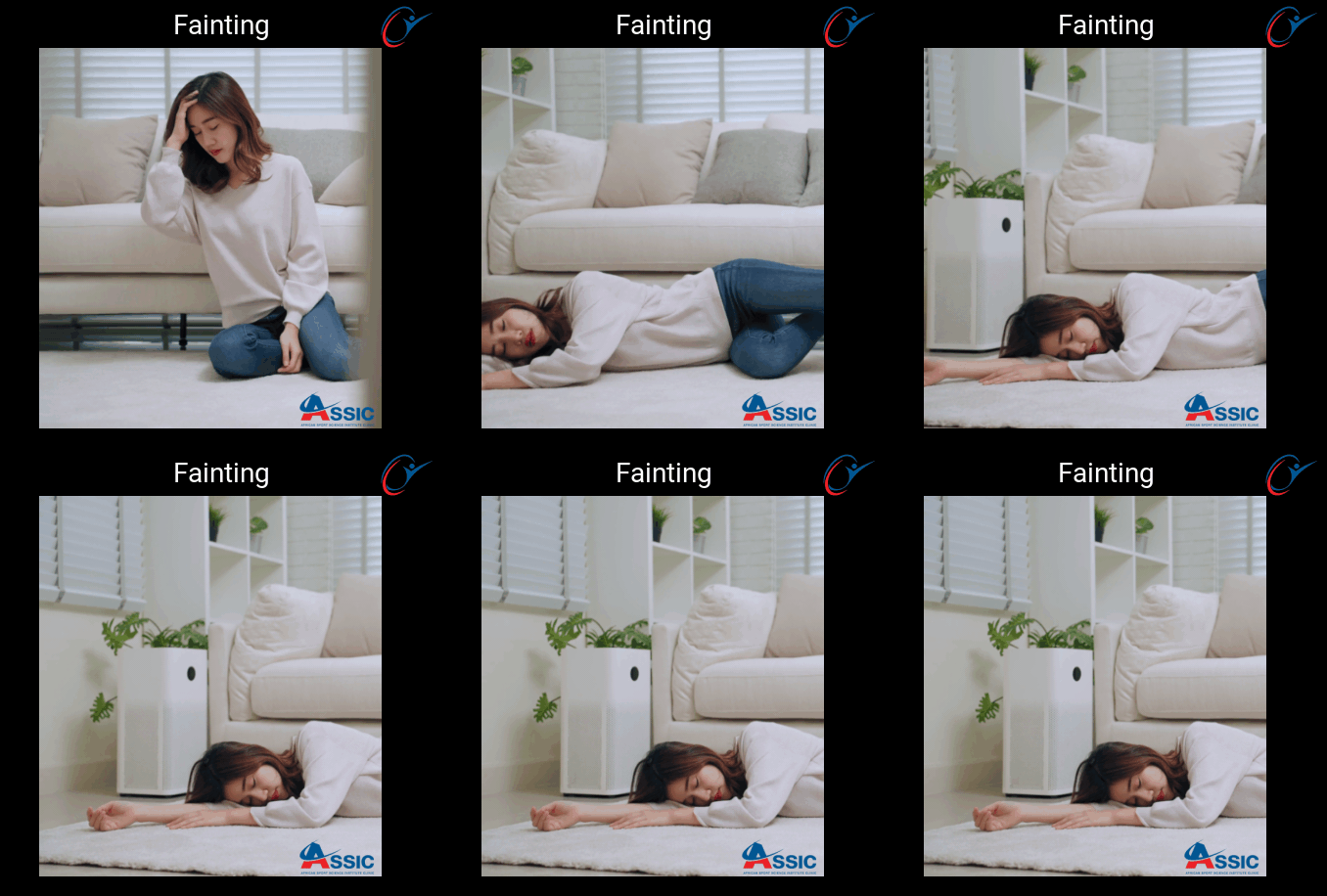
Fainting first aid
If a patient is experiencing presyncope symptoms and signs then then the priority is to maintain or assume a safe position such as sitting or lying down. After positioned in a safe position the person can benefit from using and performing the Physical counterpressure maneuvers (PCMs) to avoid syncope. PCMs is only performed in patients with isolated presyncopal symptomatology.
If the first aid provider recognizes that the presyncope attack is vasovagal or orthostatic, then the patient can be advised to perform PCMs to avoid the syncope. If the symptomatology is unresponsive or worsens after 1-2 minutes, then call for additional help (Charlton et al).
- Do not perform PCMs for stroke or heart attack.
- Lower limb PCMs is preferable unless precluded due to extenuating circumstances.
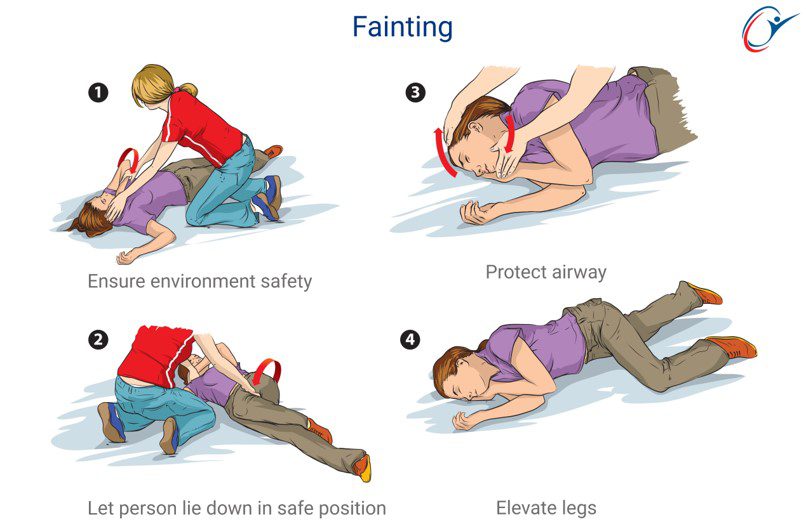
Ensure that the environment is safe.
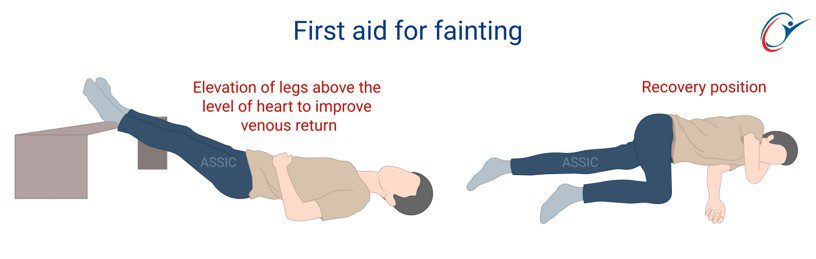
If syncope occurs then lie person in safe position. Lateral decubitus position to prevent aspiration.
Ensure airway is unobstructed.
Elevate legs and assess response.
Call for help.
Be prepared to commence with CPR.
Post exercise fainting
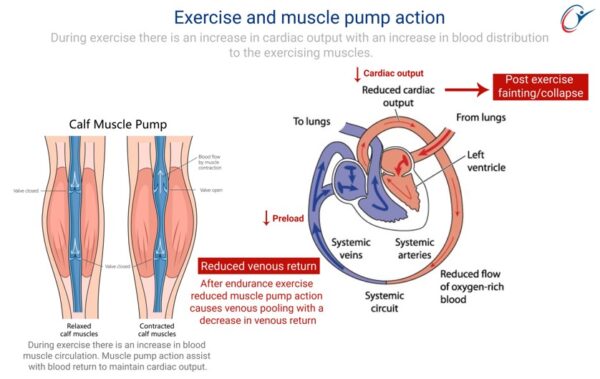
After long distance running fainting immediately after cessation of the race without adequate cool down can be secondary peripheral pooling of blood due to abrupt cessation of muscle pump action.
Managing post exercise fainting is to elevate legs to facilitate venous return.
Post exercise hypotension
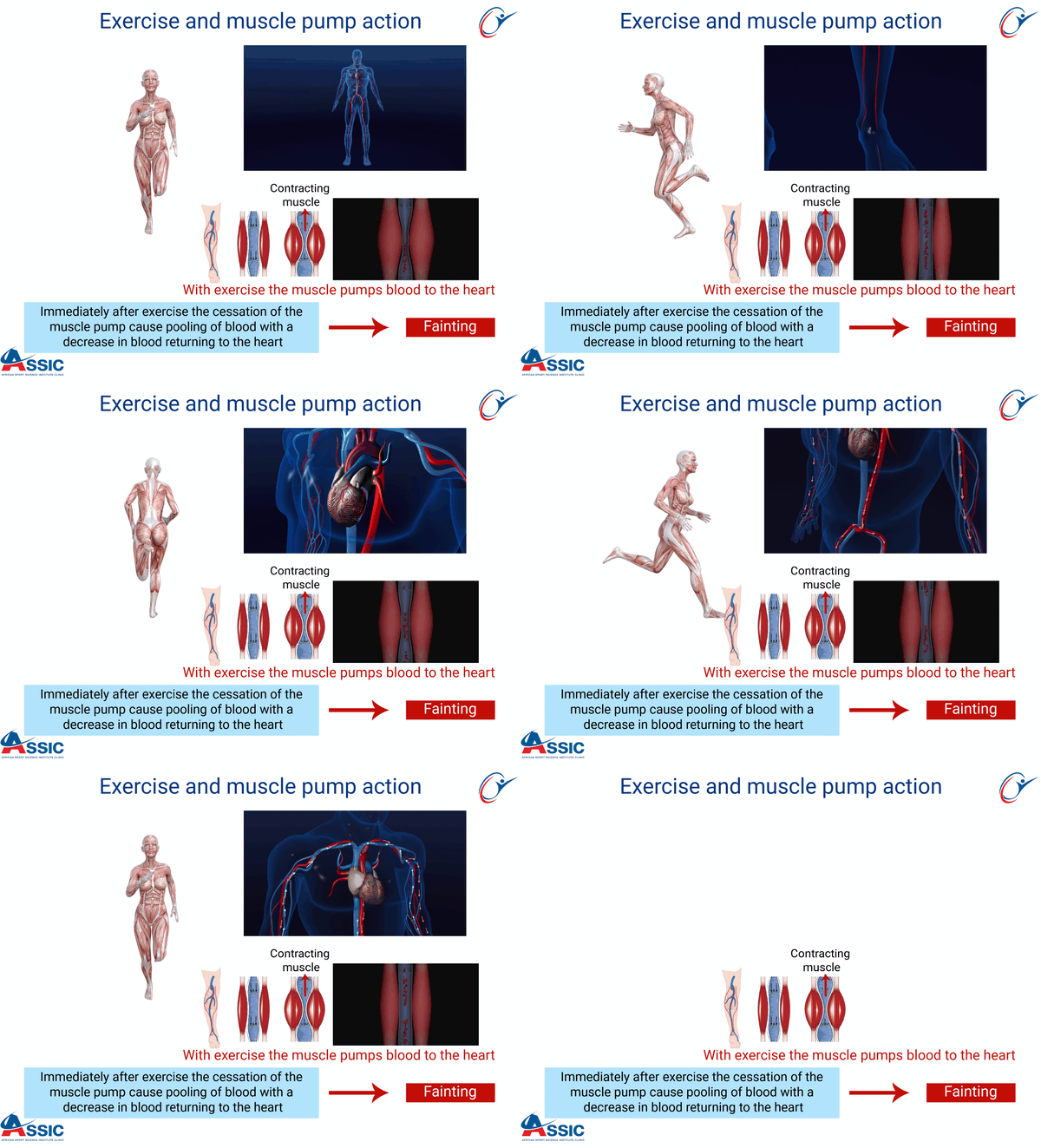
Immediately after exercise the temporary pooling of blood with ineffective venous return can cause fainting. Management include leg elevation and assessment of response. Exclude medical cause after initial intervention.
References
- Guidelines for the diagnosis and management of syncope (version 2009). Task force for the diagnosis and management of syncope; European Society of Cardiology (ESC); European Heart Rhythm Association (EHRA); Heart Failure Association (HFA); Heart Rhythm Society (HRS). A Moya, R Sutton, F Ammirati et al. Eur Heart J. 2009;30(21): 2631-2671.
- Preload maintenance protects against a depression in left ventricular systolic, but not diastolic, function immediately after ultraendurance exercise. MY Hassan, TD Noakes, P Berlyn et al. Br J Sports Med. 2006 Jun;40(6): 536-540.