Explosive Power
Explosive power tests
Explosive power tests include:
- Vertical jump, Standing broad jump, Forty metre dash

Vertical Jump
Purpose:
- To measure the explosive isotonic power of the extensor muscles of the leg and feet.
Equipment:
- Powdered chalk, wallboard graduated in meters and centimeters or a measuring tape.
Description:
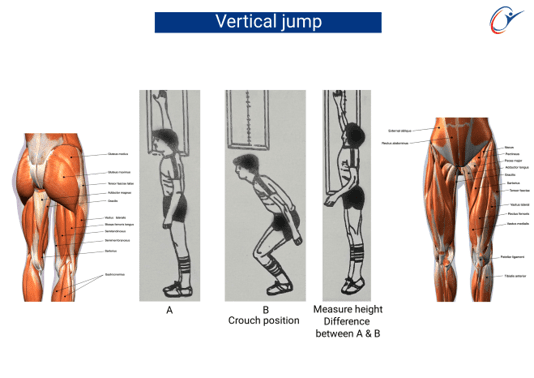
- The subject stands sideways to the wall, heels on the floor, reaches as high as possible with an extended arm and makes a mark with the chalked finger. This is the subject’s standing height.
- The subiect then takes a crouched position, swinging the arms downwards and backwards with parallel feet jumps as high as possible (Figure 3.8). At the peak of the jump, a mark is made with the chalked fingers. This is the jumping height.
Scoring:
- The score is the difference between the standing and the jumping height. The best of three trials
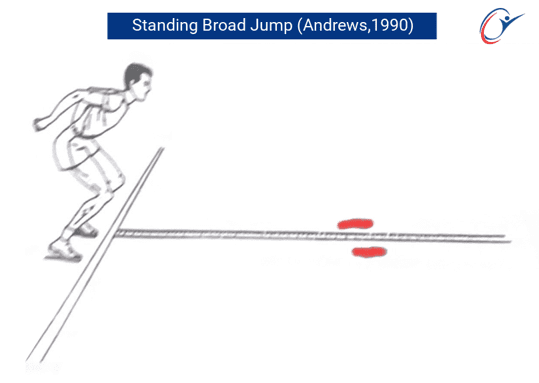
Standing Broad Jump test
Purpose:
- To estimate explosive dynamic strength of extended muscles of legs, feet and to]
Forty meter dash
Purpose:
- To measure the ability for explosive strength along a horizontal plane.
Equipment:
- Stop watches and a running area of forty meters.
Description:
- This test was administered with two subjects at a time. Both subjects take their position behind the starting line from a standing position. The commands “Are you ready, go” followed by a down sweep action of the arms as a visual cue for the timekeepers who were placed at the finish line.
Scoring:
- The score is the amount of time elapsed between the starters’ signal and the instant the subject crosses the finish line. The score is expressed to the nearest tenth o a second.
References
- Cricket iQ. Hassan et al. 2003
- Cooper, K.H. (1977). The Aerobics Way. Evans: New York.
- Coopoo, Y. (1995.) The effects of exercise and diet on selected physiological and biochemical parameters in sedentary. Indian male cohort. Doctor of Philosophy. University of Durban-Westville.
- Fleishman, E.R. (1964). The structure and measurement of Physical Fitness Prentice-Hall: Engelwoods Cliffs, New Jersey.
Contributors
Prof Y Coopoo
Dr M Y Hassan