Knee – Meniscus Tears
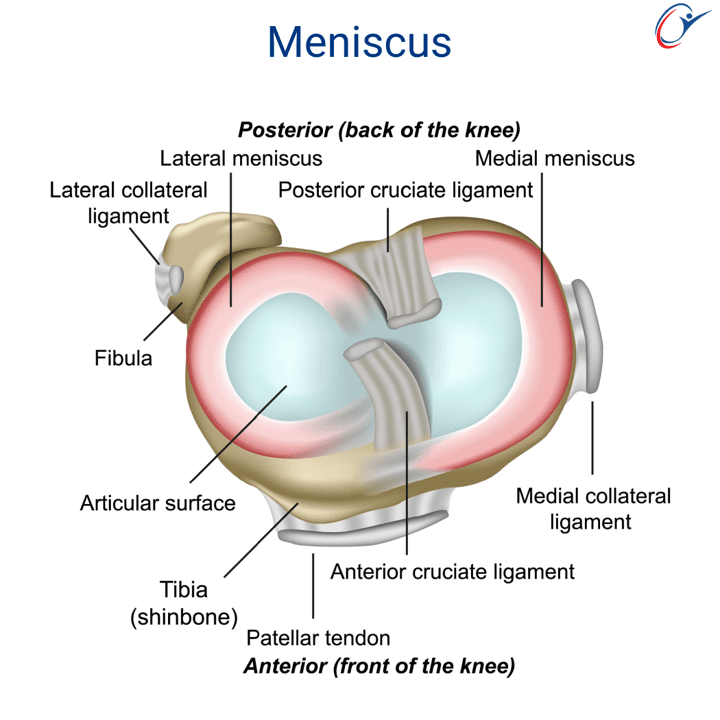
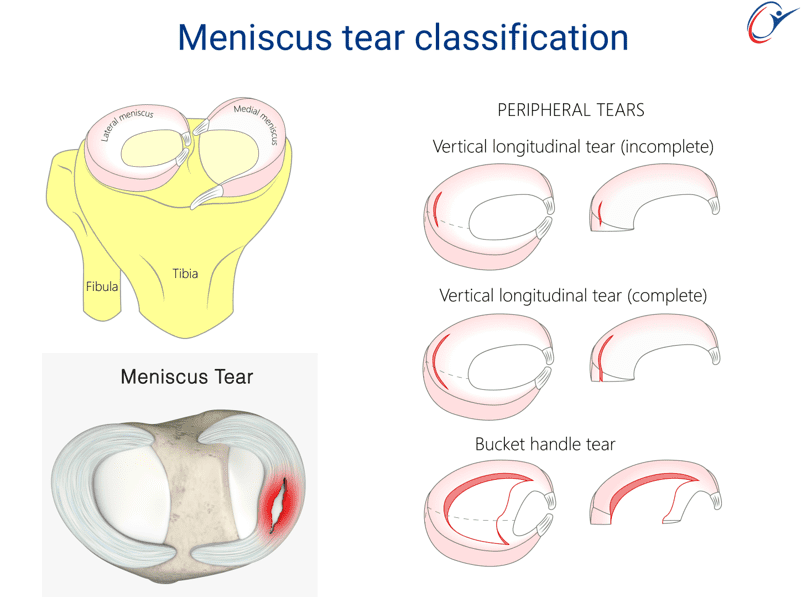
Knee meniscus tear
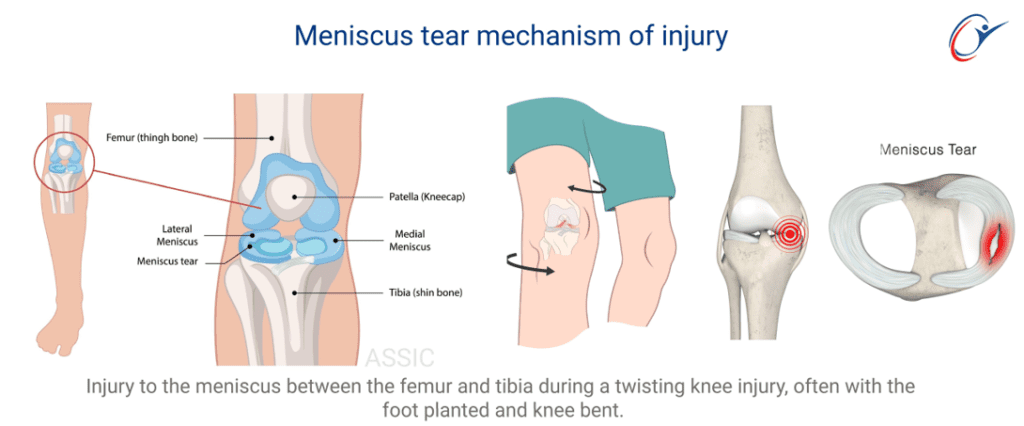
Meniscus knee tears usually arise from a knee rotational injury mechanism.
Presentation
Symptoms and signs:
- History of rotational injury
- Isolated meniscus tears don’t usually have a large knee effusion
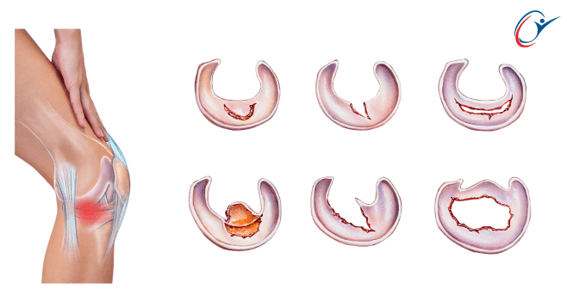
- Joint line pain
- Clicking
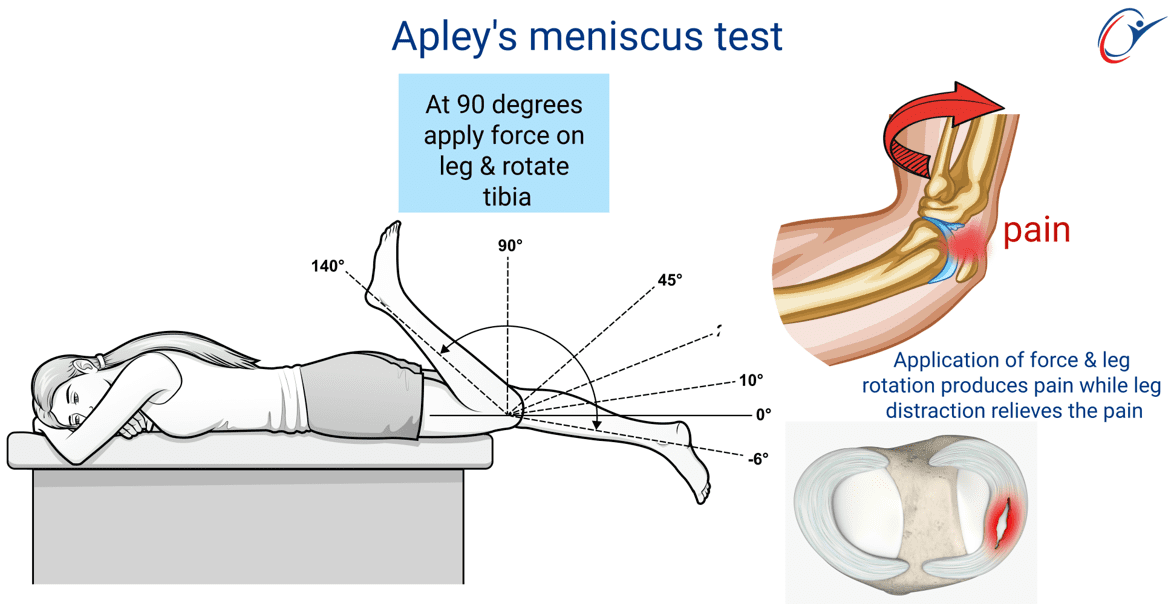
Meniscus tests positive:
- Positive McMurray test
- Thessaly test: Twisting body on single flexed knee while supporting patient produces pain/clicking
- Deep knee flexion and duck walking reproduce pain


Investigations
Knee MRI scan is the gold standard to assess for knee meniscus tears.


Surgery Technique

Surgery approach to meniscus tears
Meniscus Surgery
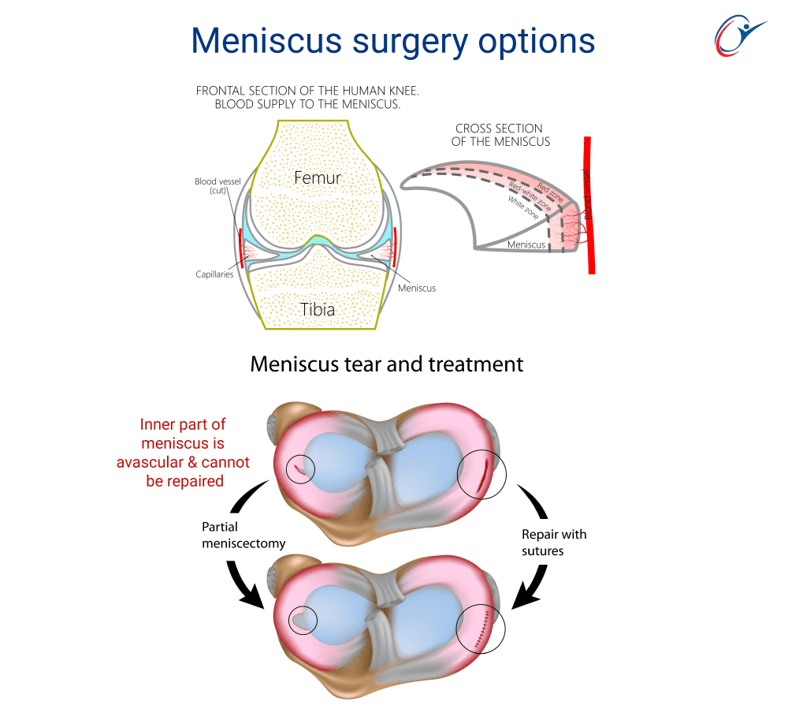
Ideal Indications for meniscal repair
Depend on the injury zone & tear characteristics
Good outcome for the following:
- Tear > 1cm & < 4cm in length
- Red-red zone
- Vertical tears
- Patient <40 years
- No mechanical malalignment
- Acute tears (<6 weeks)
- Concurrent ACL reconstruction
Knee arthroscopy and bucket handle meniscus tear repair
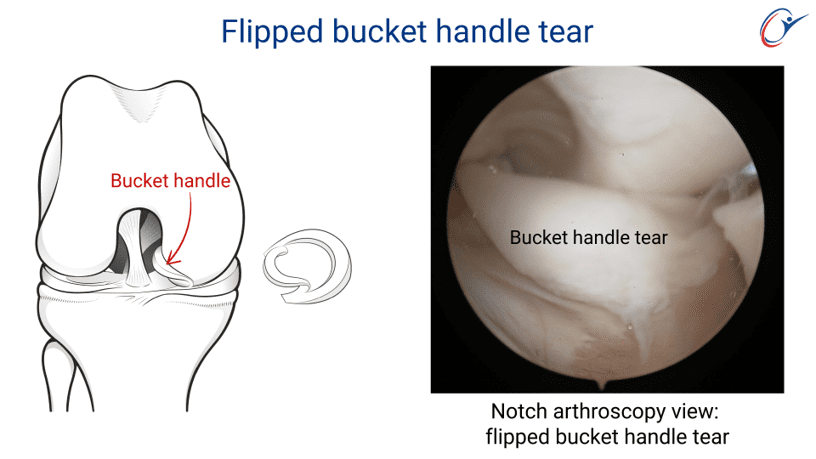
Notch view with Bucket handle tear in view.
Application of sutures
Use appropriate number of sutures to allow adequate repair.
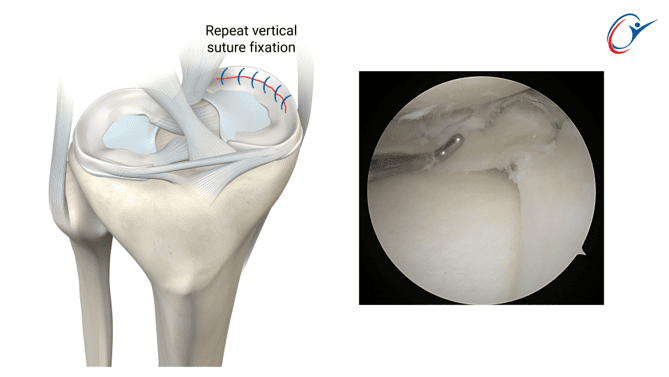
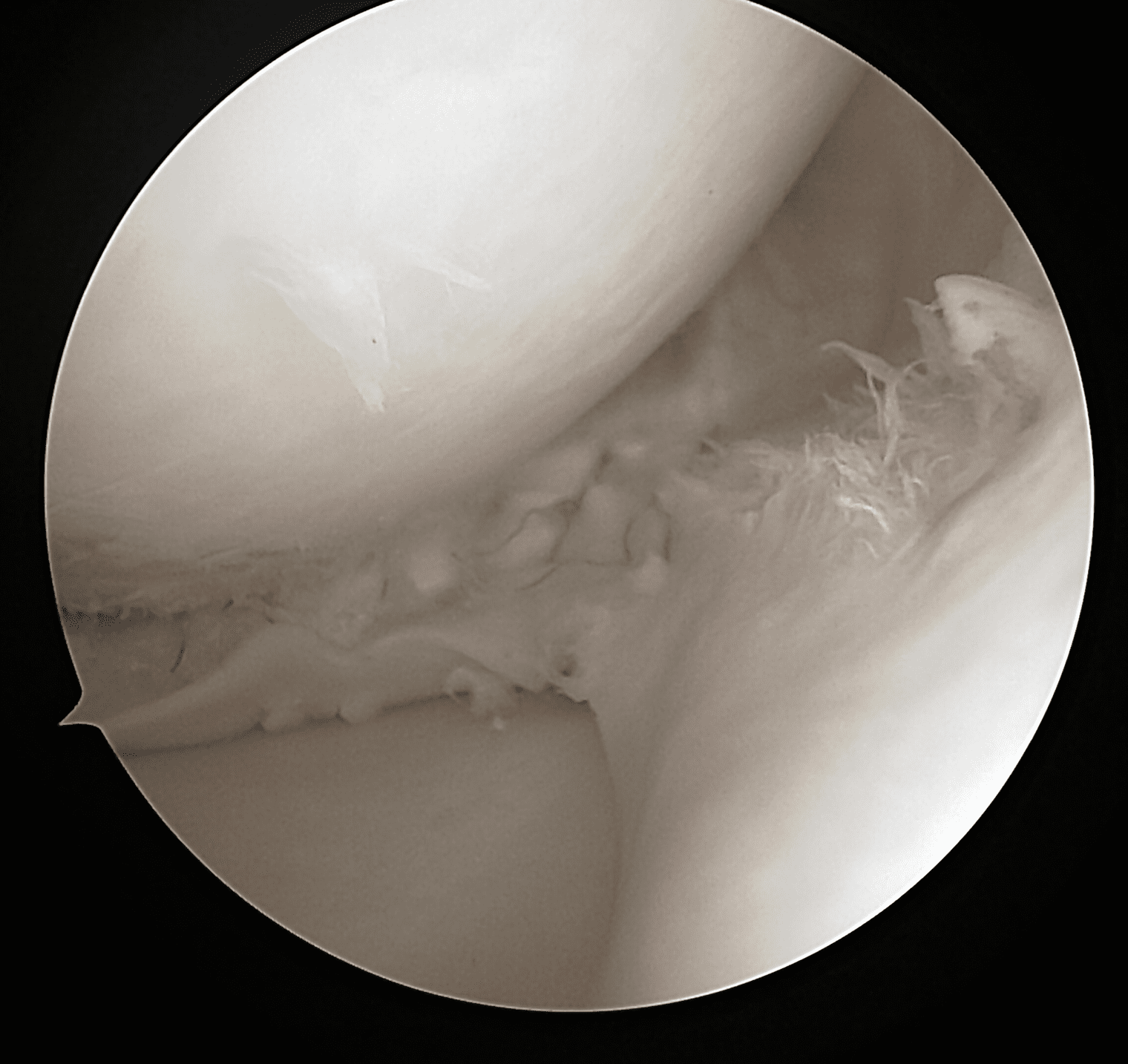
Image of meniscus repair.
Post meniscus repair
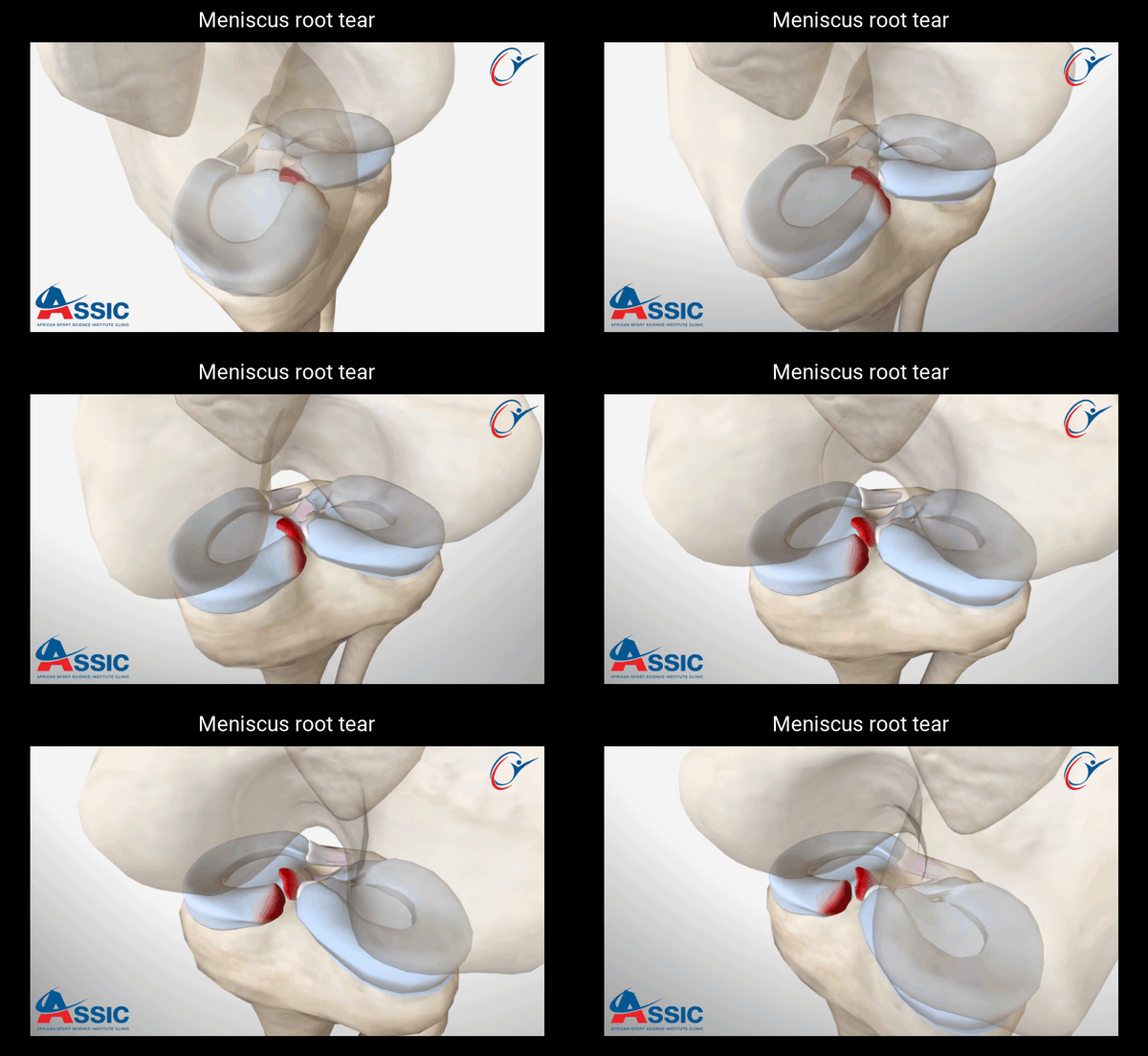
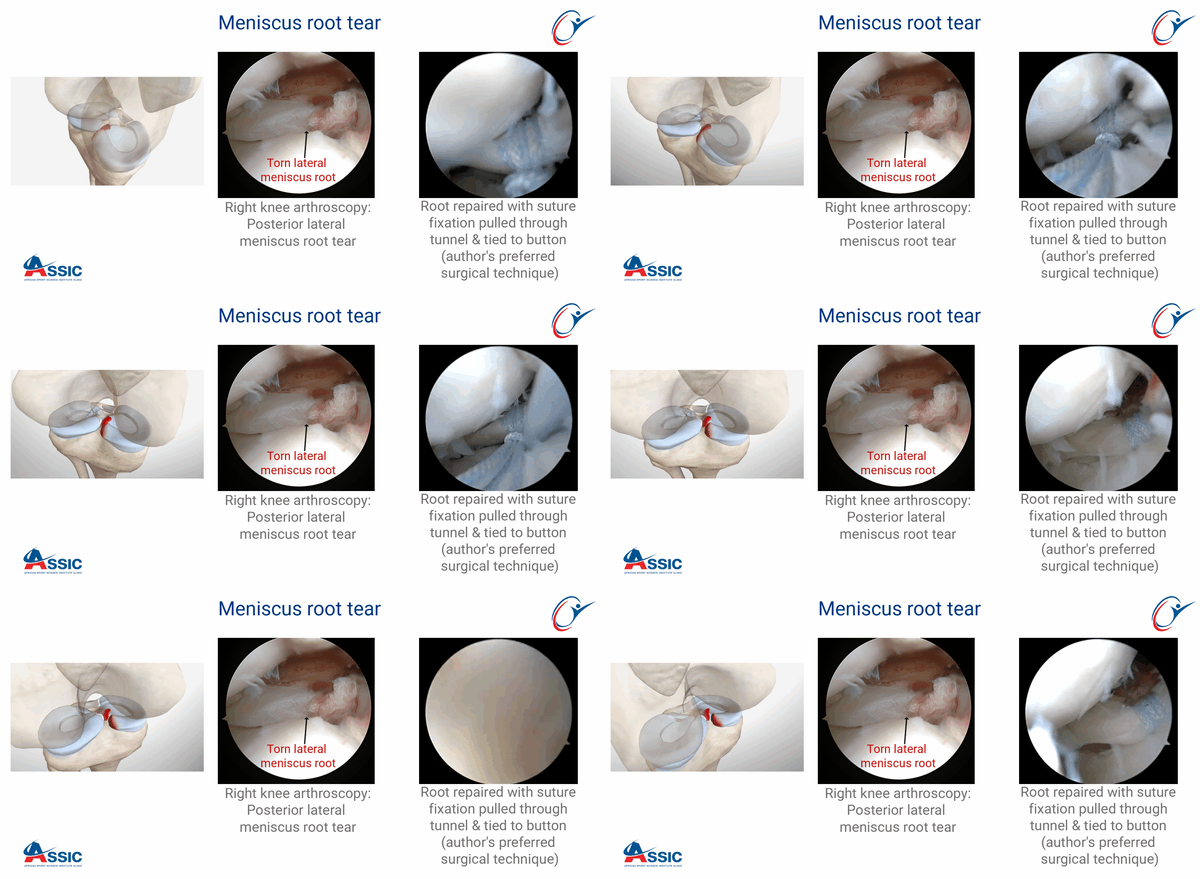
Meniscus root surgical repair principles
Suture fixation at root.
Drill tunnel at root base.
Pull through sutures attached to the torn root.
Tie root sutures to a post (button fixation).
References
- Meniscal Repair. Catherine Laible, Drew A. Stein, Daniel N. Kiridly. J Am Acad Orthop Surg 2013;21:204-213.
- Meniscal Allograft Transplantation. Jon K. Sekiya, Christopher I. Ellingson. J Am Acad Orthop Surg 2006; 14:164-174.
- Meniscal Injury: 1. Basic science and evaluation. Patrick E. Greis, Davide D. Bardana, Michael C. Holmstrom and Robert T. Burks. J Am Acad Orthop Surg 2002; 10:168-176.
- Meniscal tears and discoid meniscus in children: diagnosis and treatment. Dennis E. Kramer, Lyle J. Micheli. J Am Acad Orthop Surg 2009; 17:698-707.
Contributor
Dr M Y Hassan