Basic Exercise Physiology
Cardiovascular and peripheral vascular system
The cardiovascular system is responsible for blood oxygenation and transportation of blood and its product throughout the body to the various organs. The blood vessels are the conduits that relay blood to and from the organs.
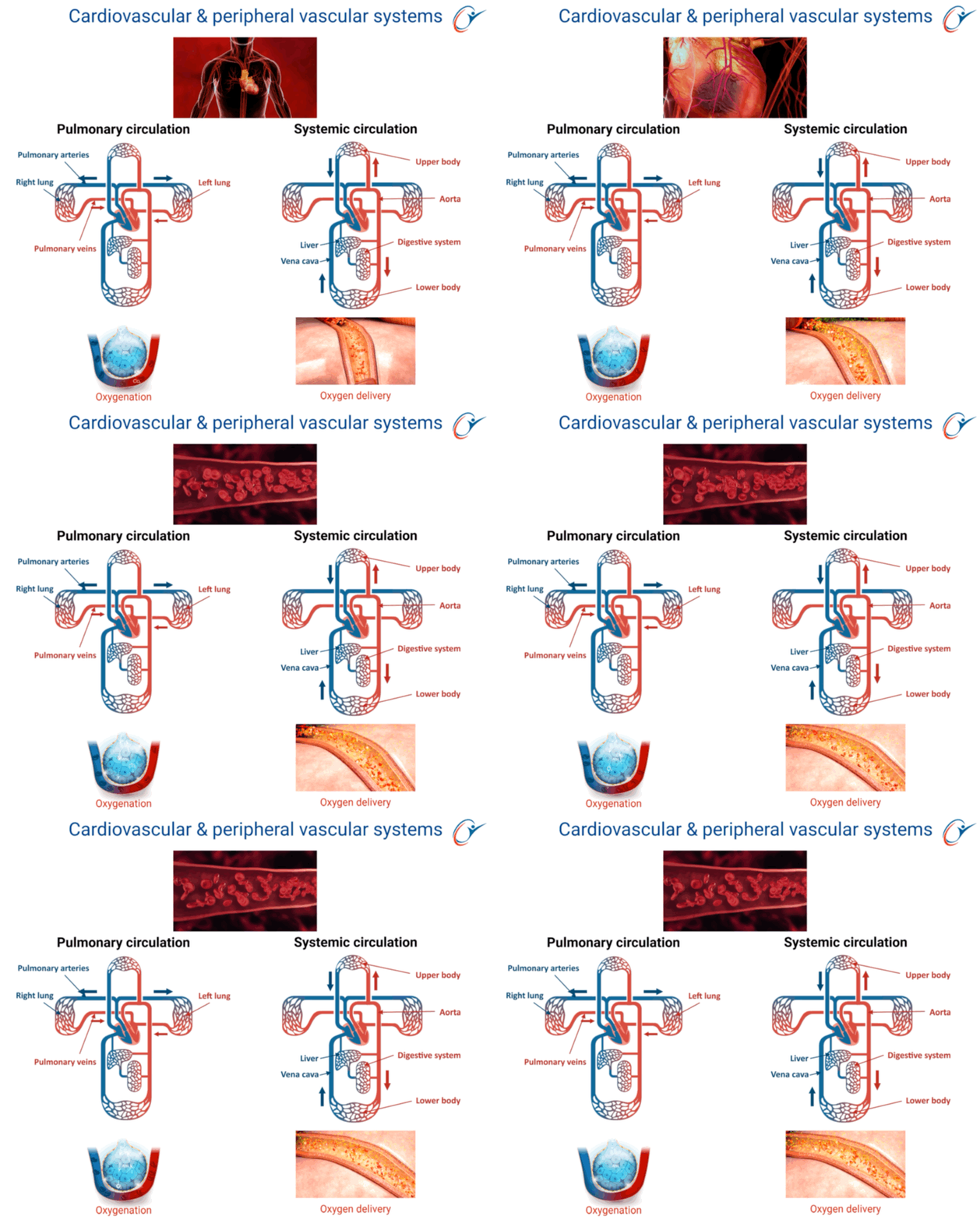
Oxygenation system
The cardiorespiratory system ensures adequate blood oxygenation with oxygenation taking place at the alveoli and delivery of oxygenated blood to the organs.
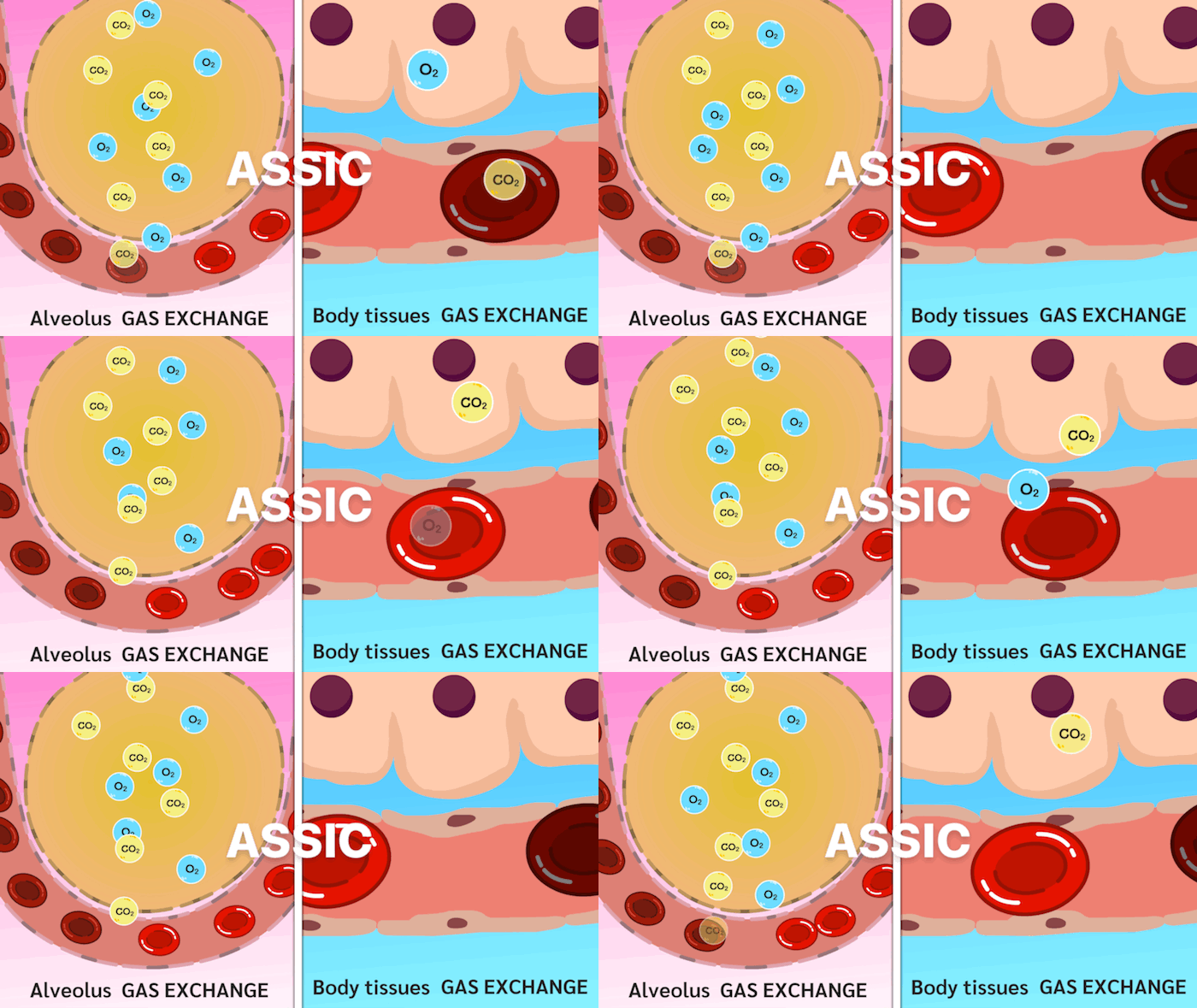
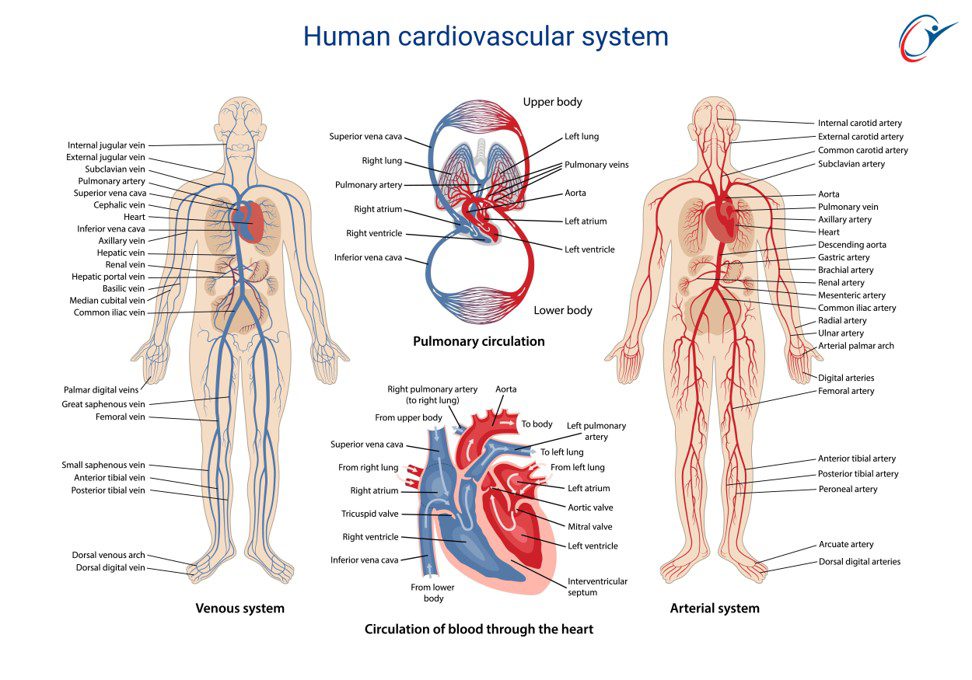
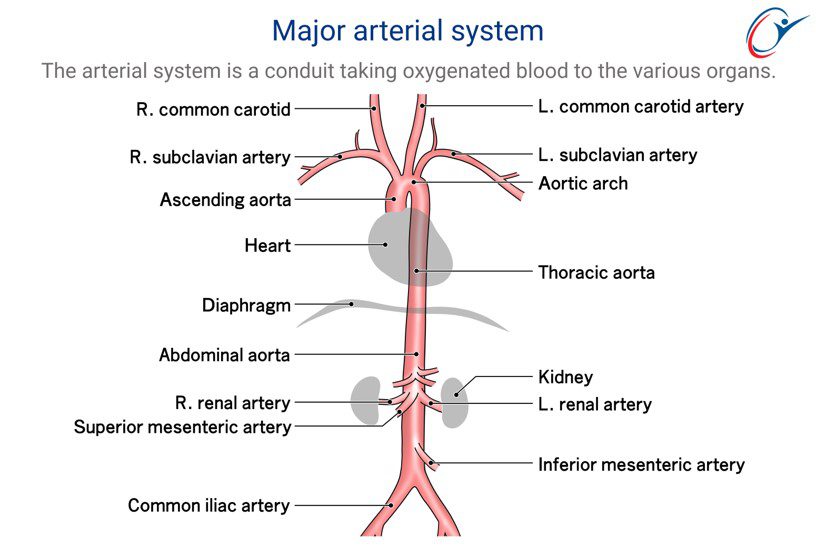
Blood vessels
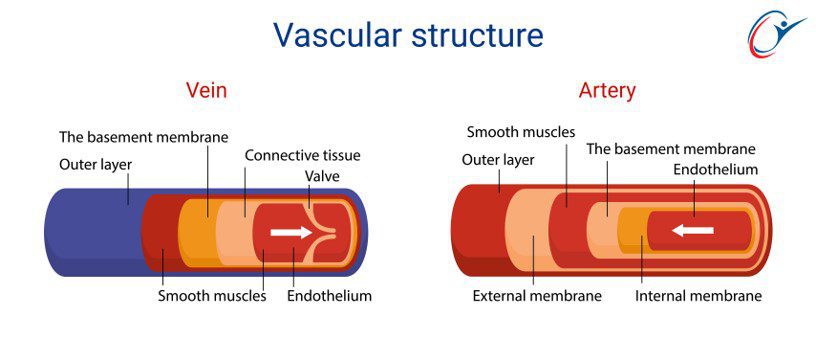
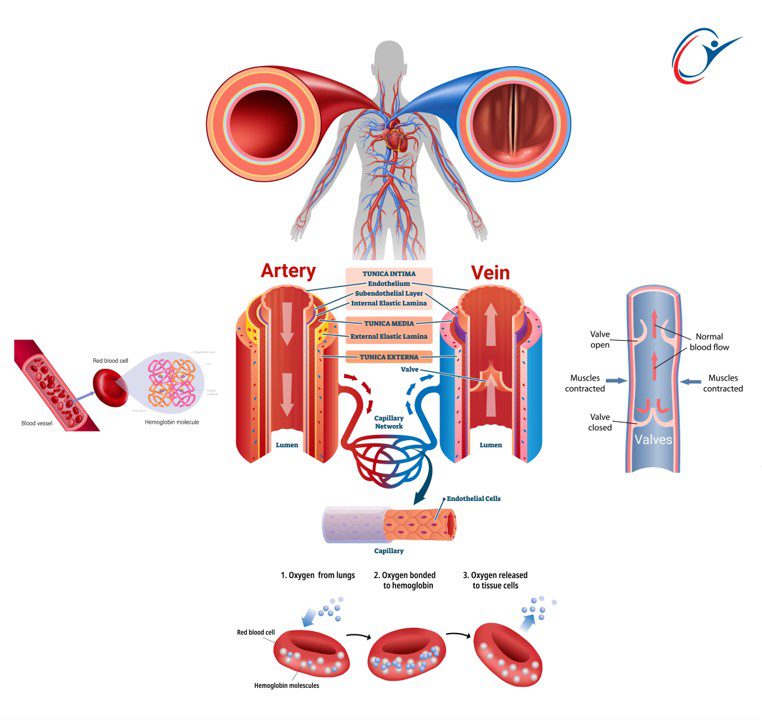
The arteries of the peripheral vascular system transport oxygenated blood and metabolites to the organs while the veins transport blood back to the heart. Except for the capillaries, the wall structure of blood vessels consists of three layers that include the inner intima, middle media and outer adventitia.
Measuring vascular function
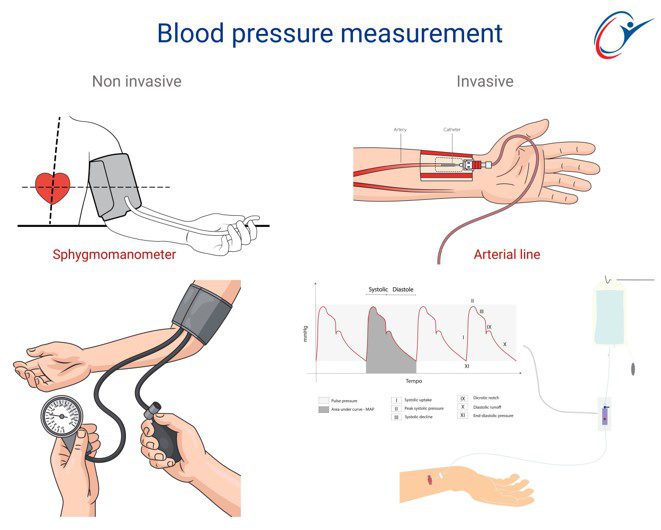
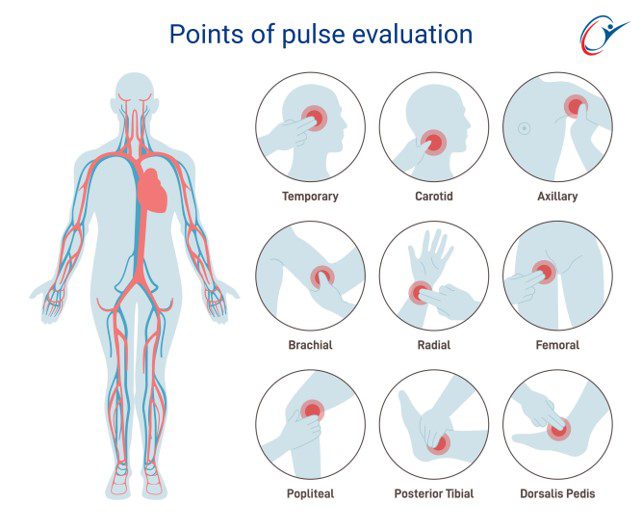
Arterial pulses are measured clinically by palpation of pulses. The pressure within the arterial system can be measured non-invasively using blood pressure machine (sphygmomanometer). Invasive arterial pressure measurement can be performed with arterial catheter insertion. Venous pressure can be measured in the neck area using the JVP clinical measurement technique to monitor venous pressure.
Muscle Adaptations With Exercise


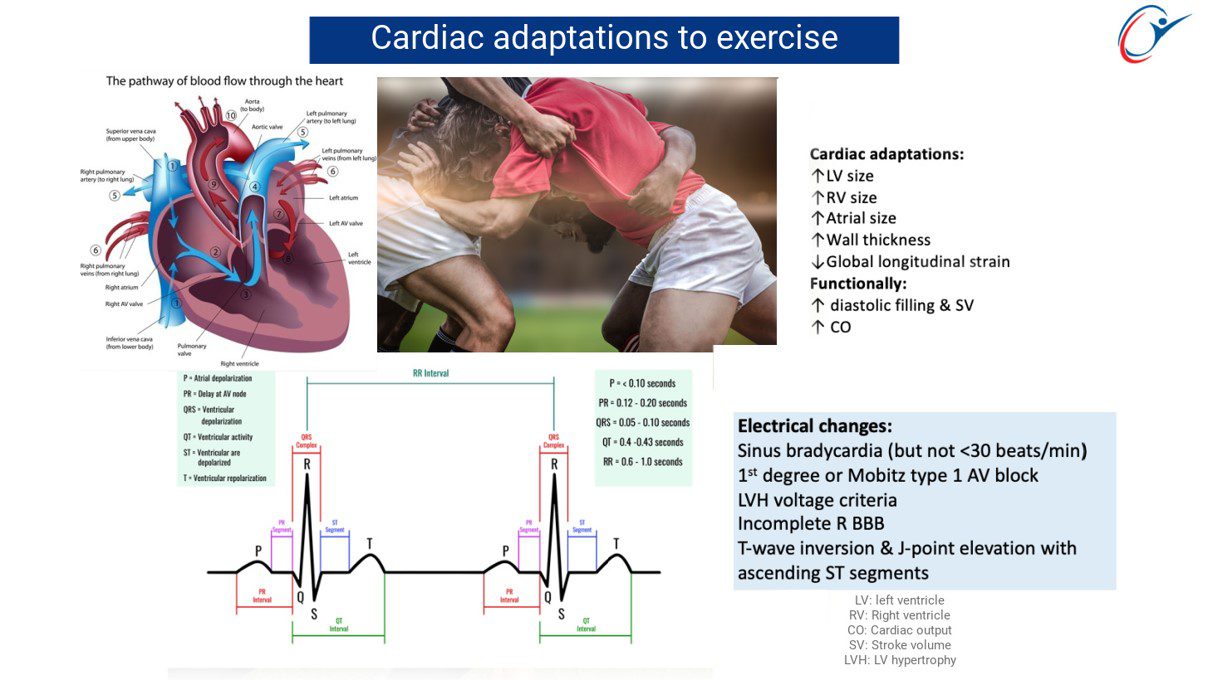
Cardiac Adaptations With Exercise
ECG Changes With Exercise Training
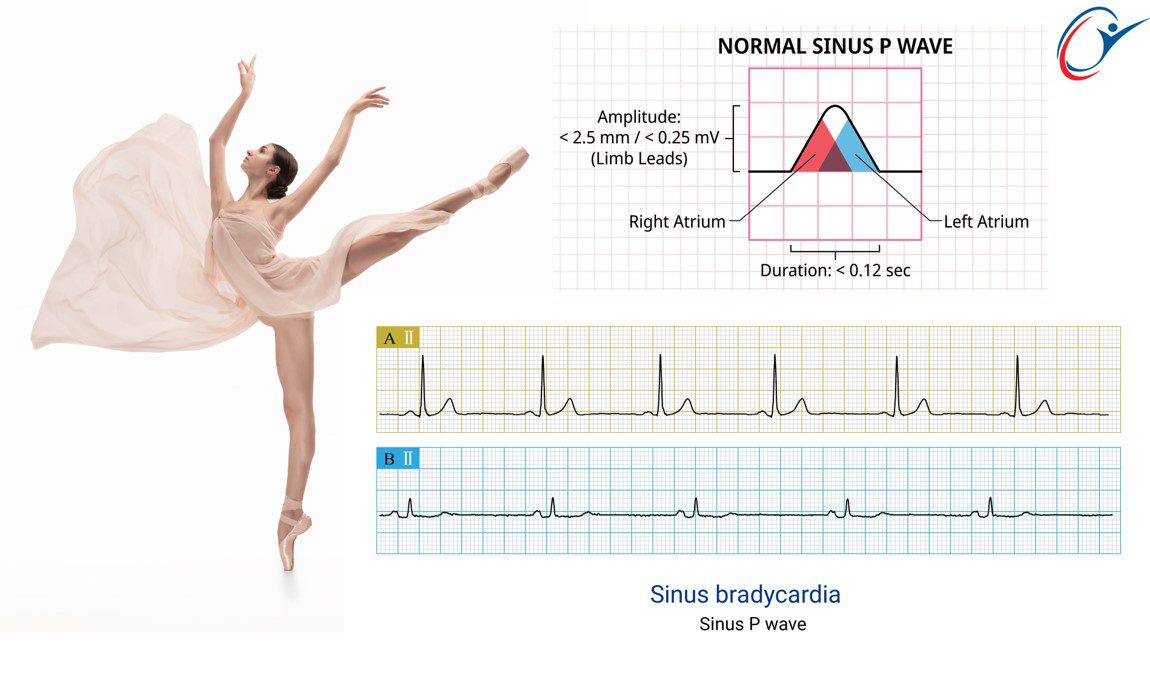
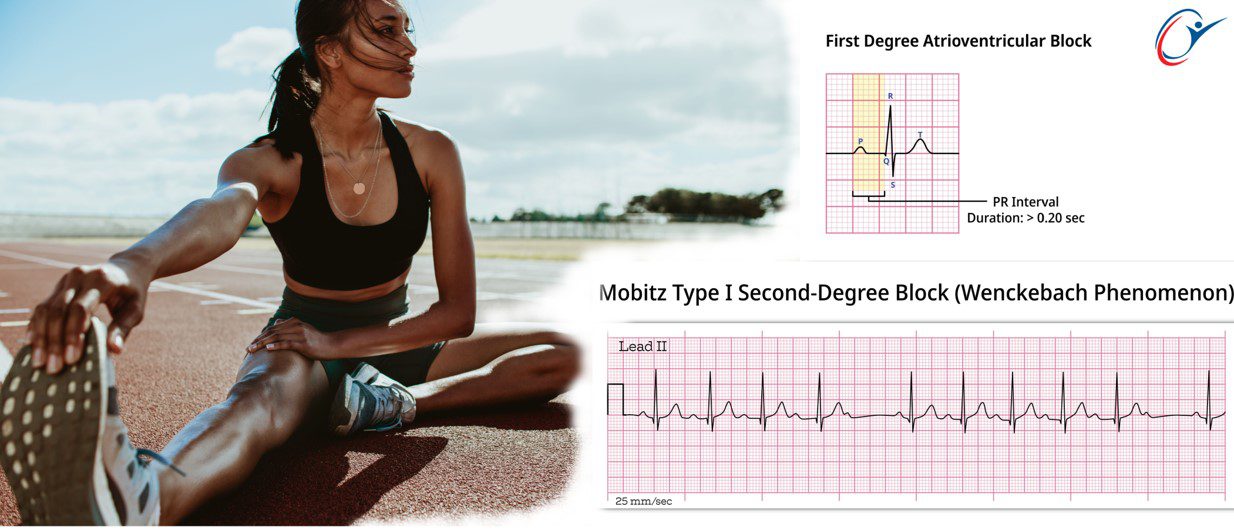

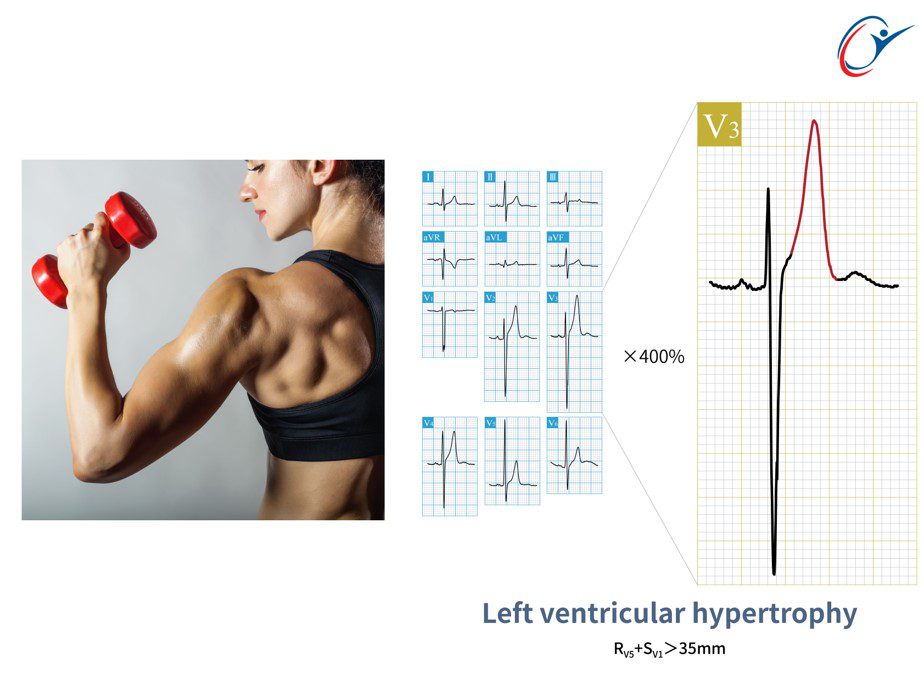
Isolated QRS voltage left ventricular hypertrophy criteria (exception include QRS voltage criteria for LVH with any voltage criteria such as left atrial enlargement, left axis deviation, ST segment depression, T-wave inversion or pathological Q waves)
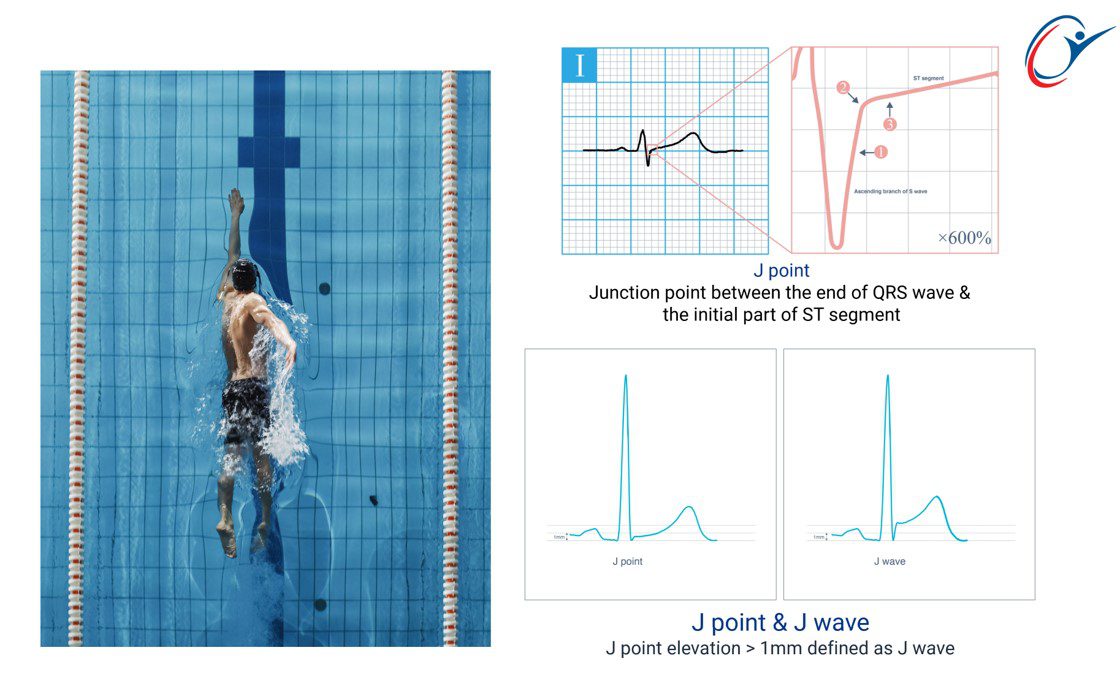
Expected ECG changes in Athletes
Normal ECG changes in the athletic population
- Sinus bradycardia (≥ 30 beats/min)
- Sinus arrythmia
- Ectopic atrial rhythm
- Junctional escape rhythm
- First-degree AV block (PR interval > 200ms)
- Wenckebach AV block (Mobitz type Ⅰ)
- Incomplete right bundle branch block
- Isolated QRS voltage left ventricular hypertrophy criteria (exception include QRS voltage criteria for LVH with any voltage criteria such as left atrial enlargement, left axis deviation, ST segment depression, T-wave inversion or pathological Q waves)
- Early repolarization (ST elevation, J-point elevation, J waves, or terminal QRS slurring)
- Convex ST segment elevation combined with T-wave inversion in leads V1-V4 in Black/African/Caribbean athletes)
(Adapted from Leite et al 2016)

Heart and Muscle Pumps
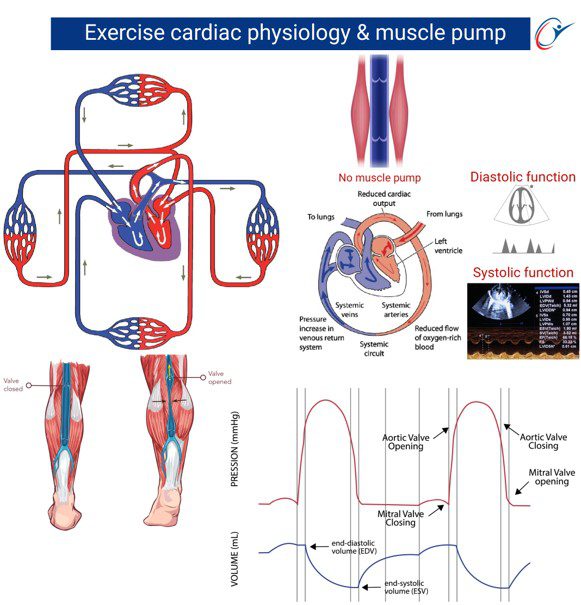
With exercise the cardiac output increases from 5l/min to 20-25 l/min. During exercise there are 2 muscle pump systems: The heart and the muscle pump work in synchrony to relay blood from the exercising muscle to the heart.
Exercise Cessation and Cardiac Output
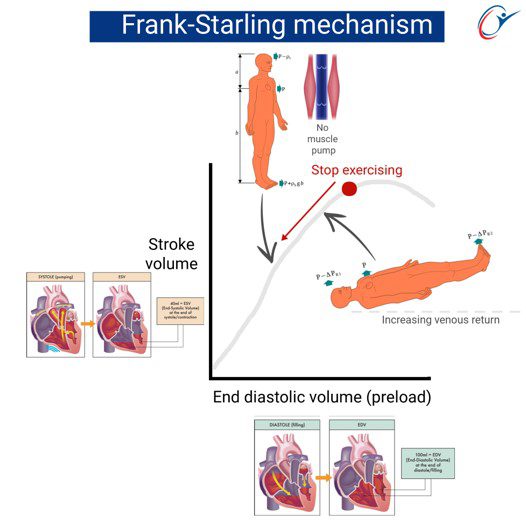
After exercise the muscle pump system stops and there is pooling of blood in the dilatated muscles. This muscle pooling can cause a reduction in preload thereby reducing cardiac output. Hassan, Noakes et al showed no changes in systolic function and no reversal of E/A ratio on echocardiographic transmitral valve filling if legs are elevated immediately after exercise by maintaining venous return. Cooling down of exercise important especially with prolonged exercise to prevent a sudden drop in diastolic filling pressure via the venous pooling effect.
References
- Preload maintenance protects against a depression in left ventricular systolic, but not diastolic, function immediately after ultraendurance exercise. MY Hassan, TD Noakes, P Berlyn, R Shave, K George. Br J Sports Med 2006;40: 536-540.
- Epidemiology of Sudden Death in Organized Youth Sports in the United States, 2007-2015. BD Endres, ZY Kerr, RL Stearns, WM Adams, Y Hosokawa, RA Huggins, KL Kucera, DJ Casa. J Athl Train. 2019 Apr;54(4): 349-355.
- Incidence and Etiology of Sudden Cardiac Death: New Updates for Athletic Departments. IM Asif, KG Harmon. Sports Health. 2017 May/Jun; 9(3): 268-279.
- Sudden cardiac death in sport. RJ Northcote, D Ballantyne. Br Med J (Clin Res Ed). 1983 Nov 5;287(6402): 1357-1359.
- Electrocardiographic evaluation in athletes: ‘Normal’ changes in the athlete’s heart and benefits and disadvantages of screening. SG Leite, J Freitas, M Campelo, MJ Maciel. Rev Port Cardiol. 2016 Mar;35(3): 169-77.
- Sudden death in athletes. V Patel, P Elliott. Clin Med (Lond). 2012 Jun;12(3): 253-6.
- Prevalence of hypertrophic cardiomyopathy in an outpatient population referred for echocardiography study. B J Maron, EE Peterson, MS Maron, JE Peterson. Am J Cardiol 1994;73: 577-580.
- Myocarditis. LT Cooper Jr. N Engl J Med. 2009 Apr 9;360(15): 1526-38.
- Acute myocarditis: aetiology, diagnosis and management. T Lampejo, SM Durkin, N Bhatt, O Guttmann. Clin Med (Lond). 2021 Sep;21(5): e505-e510.
- Sudden cardiac death in sport. MY Hassan. Sports pulse. 2023 Vol 2 No 1: 8-10.
- .Sudden cardiac death In athletes. Meagan M Wasfy, Adolph m Hutter, Rory B Weiner.MDCVJ. Ⅻ(2) 2016.
Contributor
Dr M Y Hassan